
What Is Hydronic Heating? What a Homeowner Should Know
Hydronic heating warms a home with hot water instead of forced air.
Key points
- Hydronic heating is quiet and even, but slow to respond and it cannot cool.
- Know your gauge and your radiators; check them monthly in the heating season.
- Leave the safety devices to the yearly service.
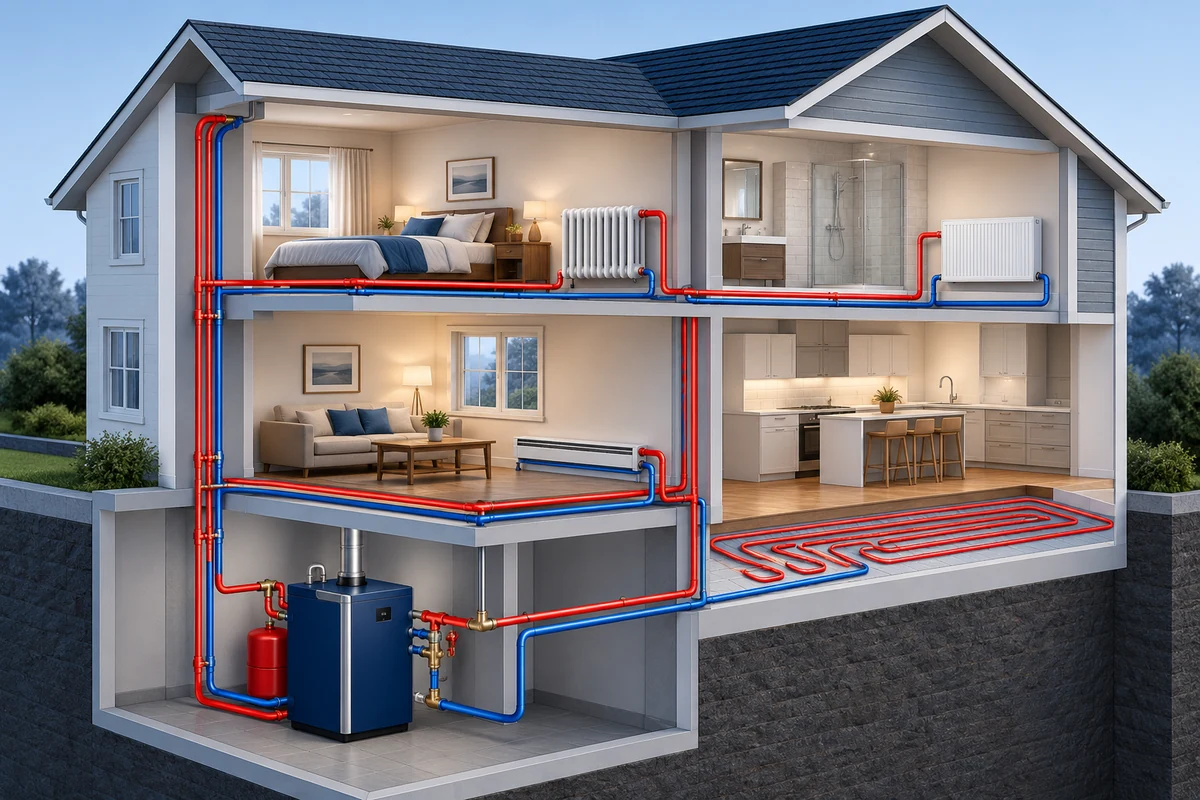
Hydronic heating warms a home by moving hot water through pipes to radiators, baseboard units or tubing under the floor. A boiler heats the water, and a pump circulates it. There is no fan and no ductwork.
The heat is gentle and even. Rooms warm up more slowly than they do with a forced-air furnace, but the warmth tends to last longer after the system stops. This guide explains how the system works, the common types, what a homeowner can check safely and when to call a technician.
What parts make up the system
- The boiler. It heats the water with natural gas, propane or electricity. It is the heat source, in the same way a furnace is the heat source for a forced-air system.
- The piping. Warm water travels through sealed pipes, usually copper or PEX, hidden in walls and floors.
- The circulator pump. In most modern systems a small pump moves the water through the pipes. Older systems sometimes rely on the natural rise of warm water instead.
- The heat emitters. These put the heat into the rooms: baseboard units, standing radiators, panel radiators or tubing under the floor.
- The thermostat and zone valves. Homes can be split into zones, so different rooms keep different temperatures without heating empty ones.
The main types
Hydronic baseboard heating
A finned pipe inside a metal case runs along the base of the wall. Warm water heats the fins, and room air rises through them. Baseboard units are common, quiet and low maintenance. Furniture placed against them blocks their airflow.
Radiators
The classic standing radiator holds a large amount of hot water or steam. It releases heat slowly, so a room stays warm after the boiler stops. Radiators take up floor and wall space.
Hydronic radiant floor heating
Flexible tubing under the floor carries warm water through the whole floor surface. The heat is even from the ground up, and there is nothing visible in the rooms. Installing it means opening the floor, so it works best during new construction or a major renovation.
Panel radiators
Flat, wall-mounted panels combine fast response with a small footprint. They suit newer homes and rooms with limited wall space.
What people like about hydronic heating
- Even heat. No blasts of warm air, no drafts from registers.
- Little air movement. Without a fan, far less dust is carried around the rooms.
- Quiet. The pump makes a low noise; there is no blower.
- Zoning. Separate thermostats heat the rooms you use.
The signs that need boiler service are listed under “When to call a technician” below.
Repair or replace
A boiler that is serviced and does not leak can serve for many years; replacement becomes the better choice when the boiler itself leaks or needs repeated large repairs. Our guide on what HVAC repair costs and what drives the price explains how repair costs are thought through.
Sources
- CDC: Carbon monoxide poisoning basics · Checked October 2026
- Nicor Gas: safety — what to do if you smell gas · Checked October 2026
Need help with this?
Boiler ServicesOur boiler services page describes the work and how to book it. We assess the system, explain what we found and provide a written quote for approval before work begins.


