
12 Common HVAC Myths: What Actually Happens
Twelve common heating and cooling beliefs, what actually happens instead, and the simple checks that matter more.
Key points
- Comfort comes from correct sizing, clean airflow, sealed ducts and maintenance — not shortcuts.
- Look at the filter monthly and change it when it is dirty.
- One maintenance visit a year finds small wear before it becomes a breakdown.
- When something changes, note what the system does and describe it when you call.
Heating and cooling advice gets passed around like folklore: much of it sounds right and some of it works against you. Here are twelve common beliefs, what actually happens instead, and the simple habit that matters more than any of them.
Myth 1: A bigger system is a better system
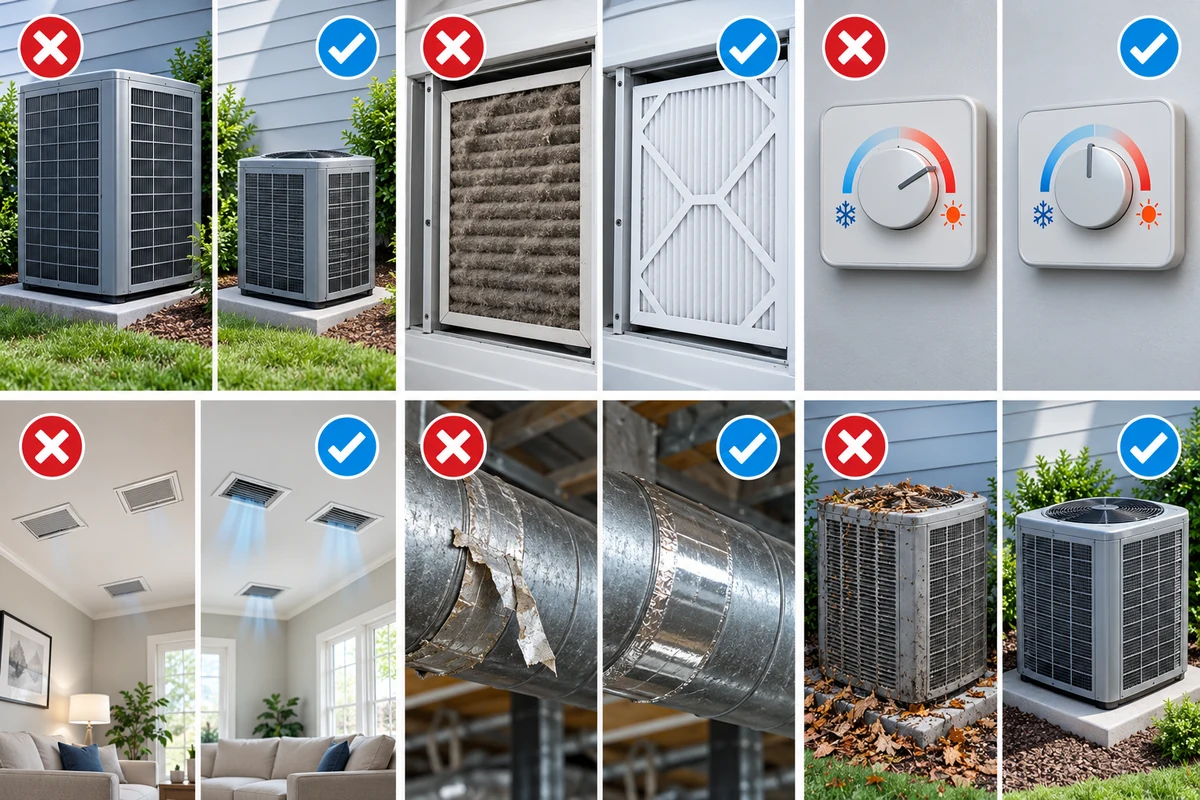
Heating and cooling equipment has to be matched to the building. A unit that is too large reaches the set temperature too fast, switches off, and starts again soon after. That short cycling wears parts, leaves rooms unevenly heated and cooled, and does a poorer job of removing humidity in summer. The right size comes from a load calculation based on the building, its insulation and its windows, not from buying one size bigger.
Myth 2: The filter only needs changing once a year
A filter full of dust barely lets air through. The furnace works harder, the house gets less airflow, and in summer the indoor coil can freeze. Look at the filter monthly and change it when it looks dirty. Our filter guide explains sizes and ratings.
Myth 3: The densest filter is always best
Filters with a high MERV rating catch finer particles, and they also resist the airflow more. If the system is not designed for that resistance, a dense filter starves it of air. A mid-range rating suits many homes. If you want much finer filtration, ask a technician whether your system and filters can deliver it, or consider a separate air purification product.
Myth 4: Thermostat placement does not matter
The thermostat measures the spot where it hangs. Next to a sunny window, a heat source or a drafty door, it reads a temperature the rooms do not feel, and it runs the system at the wrong time. An interior wall in a room you use is the usual good spot. If the temperature on the screen does not match how the rooms feel, have the placement and the thermostat checked.
Myth 5: Duct tape is for ducts
Despite the name, common cloth duct tape dries and peels under the temperature swings inside a duct run. Real duct sealing uses mastic sealant or foil-backed tape made for the job. If ducts are leaking in buried or hard-to-reach places, sealing them properly is a job for a technician.
Myth 6: High efficiency ratings always lower the bills
The rating describes the equipment, not the home. Poor installation, the wrong size, leaky ducts, thin insulation and how you set the thermostat all change the actual energy use. High-efficiency equipment pays off when it is chosen for the building, installed well and kept clean. The equipment is one part of the system.
Myth 7: If it is not broken, leave it alone
Systems usually decline gradually, not suddenly. A yearly maintenance visit finds small wear before it becomes a breakdown on a cold night. One visit a year is cheaper and calmer than the alternative.
Myth 8: Closing vents in unused rooms saves money
Closing vents changes the pressure the ducts were designed for. Air gets pushed into places it should not go, the blower works against the restriction, and the rooms you use may hardly gain from it. If you want to control rooms separately, have a proper zoning design quoted.
Myth 9: Cranking the thermostat makes it faster
The system heats or cools at a fixed rate. Setting the thermostat five degrees past the target does not change the speed; it just runs longer and overshoots. Set the temperature you want and let the system reach it.
Myth 10: The thermostat reading is always right
Sensors drift, dust builds up inside the case, and placement skews the reading. If one room feels very different from the display, or you constantly adjust the setting to be comfortable, ask a technician to check calibration and placement. Remote sensors and newer thermostats can also average several rooms.
Myth 11: Modern systems do not need maintenance
Wear, dust and small leaks still happen. Maintenance does not add life to a machine that is already worn out, but it catches a dirty coil, a weak part or a blocked drain while these are still cheap to handle.
Myth 12: A new system always raises the home’s value
A new system helps a sale when it is the right size, properly installed, well documented and maintained. One that is oversized, poorly installed or undocumented impresses nobody. Buyers look at condition and records more than model year.
Sources
- EPA: What is a MERV rating? · Checked October 2026
Need help with this?
All servicesOur services page lists every service and how to book it. We assess the system, explain what we found and provide a written quote for approval before work begins.


