
Furnace and AC Filter Guide: Size, MERV Rating and When to Change It
How to find your furnace or AC filter size, what the MERV rating means, how often to change the filter, and the signs that a filter is wrong for your system.
Key points
- Use the right size and a rating the system can handle.
- Check the filter monthly and change it when it is dirty.
- Whistling, freezing or shut-offs after a filter change mean the airflow needs a look.
Your furnace and your central air conditioner share one air filter. Use the size printed on the old filter, choose a rating your system can handle, and look at the filter once a month. Change it when it looks dirty.
That is the whole habit. The rest of this guide explains each part.
What the filter does
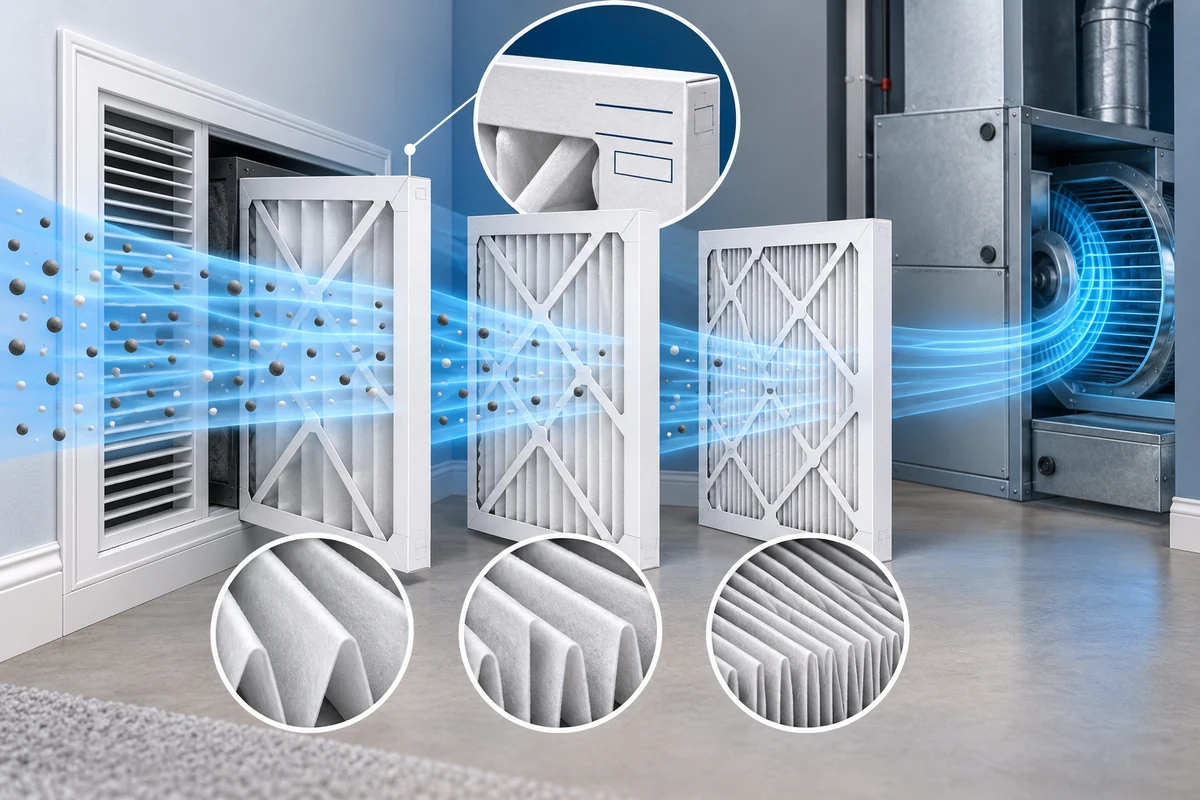
The filter sits where air returns to the furnace or air handler. It catches dust before the dust reaches the blower and the indoor coil. Its first job is to protect the equipment. Cleaner air in the house is the second benefit.
A blocked filter lets too little air through. In winter the furnace can overheat and shut its burners off. In summer the indoor coil can freeze. Both problems often start with a filter nobody looked at.
Find the filter and its size
Look in one of these places:
- a slot on the side or bottom of the furnace or air handler;
- behind a large return grille in a wall or ceiling;
- a separate filter cabinet next to the furnace, for thicker filters.
The size is printed on the frame of the old filter as three numbers: length, width and thickness in inches. Buy the same three numbers. A filter that is too small lets air pass around it. A filter that is too big gets bent to fit, and it then leaks at the edges.
What the MERV rating means
MERV is the scale printed on most filters. For home filters it runs from 1 to 16. A higher number means the filter catches smaller particles.
| Rating | What it catches | Good to know |
|---|---|---|
| MERV 1 to 4 | Lint and large dust | Thin fiberglass filters. They protect the equipment and do little for the air you breathe. |
| MERV 5 to 8 | Dust, pollen, mold spores | Pleated filters. A sound basic choice for many homes. |
| MERV 9 to 12 | Finer dust and pet dander | A step up for homes with pets or allergies. |
| MERV 13 to 16 | Very fine particles, including smoke | Check with a technician first. Not every blower and duct system can pull enough air through them. |
Higher is not always better. A filter that is too dense for the system slows the air down. The house feels less comfortable and the equipment works harder.
Some stores use their own scales in place of MERV. The idea is the same: a higher number catches smaller particles and resists airflow more.
How often to change it
The EPA’s Care for Your Air guide says to change or clean filters regularly, following the instructions on the package. A practical routine: look at the filter every month and change it at least every three months.
Check more often when:
- you have pets;
- someone in the home has allergies or asthma;
- there is renovation work or a lot of dust;
- the system runs most of the day, in the middle of winter or summer.
Thick filters, four or five inches deep, last longer than one-inch filters. Follow the maker’s label, and still look at the filter during the season.
Do not run the system without a filter, even for a short time.
A washable filter must be cleaned as its maker says and must be fully dry before it goes back in.
When to choose a lower-rated filter
If airflow becomes noticeably weaker after installing a higher-rated filter, try a filter rating recommended for the system. If the problem remains, the cause may be elsewhere.
A filter check is part of a normal maintenance visit.
Sources
- EPA: What is a MERV rating? · Checked October 2026
- EPA: Care for Your Air — a guide to indoor air quality · Checked October 2026
Need help with this?
All servicesOur services page lists every service and how to book it. We assess the system, explain what we found and provide a written quote for approval before work begins.


