
Boiler Winter Maintenance: A Homeowner Checklist
A short winter checklist for a home boiler: what you can check yourself, what a yearly service covers, and the signs that need a technician right away.
Key points
- Book one service before winter, then check the gauge, the floor and the radiators monthly.
- Keep a working carbon monoxide alarm.
- Call right away for leaks, warning sounds, a yellow flame or no heat.
Before winter, have the boiler serviced once by a technician. During winter, look at it for a few minutes each month: the gauge, the floor around it, the radiators and the carbon monoxide alarm. Most boiler breakdowns give a small warning first, and these checks are how you catch it.
Boiler work on gas, burners and controls is not a homeowner job. The checks below are the safe part.
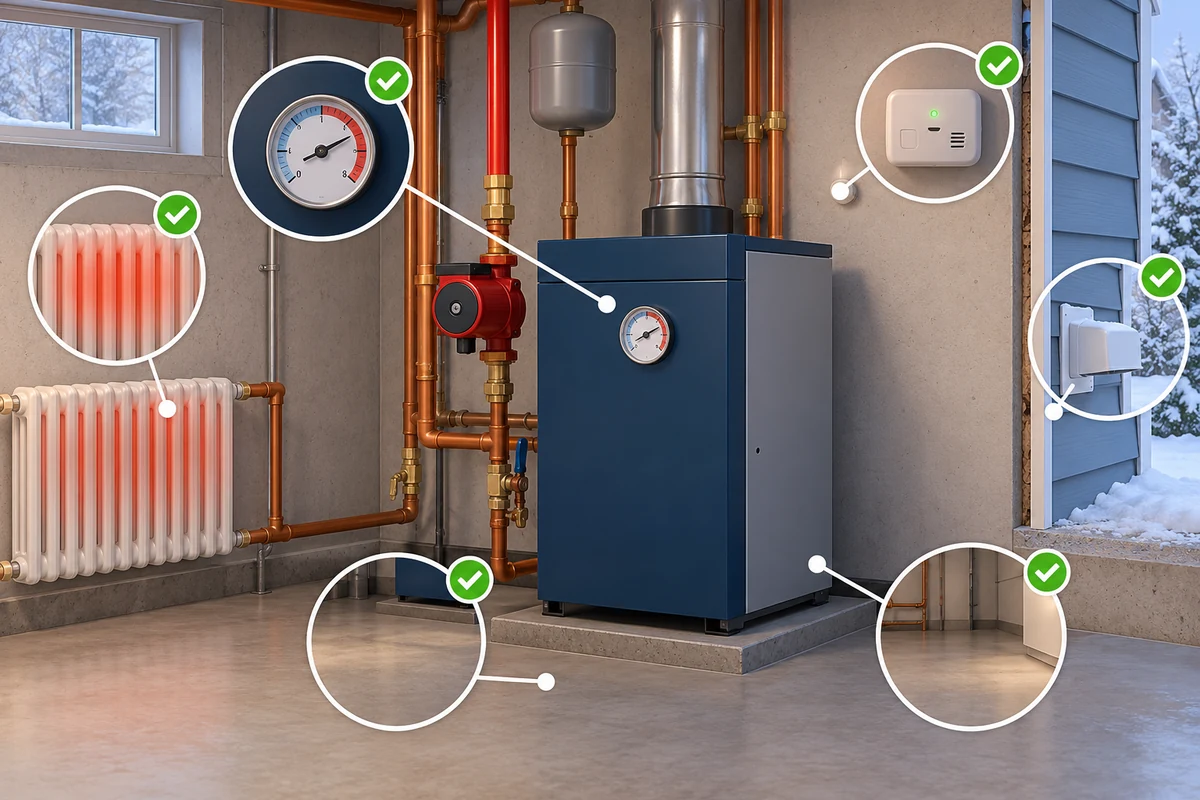
Know which system you have
- Hot-water boiler. Hot water runs through radiators, baseboards or floor pipes. The boiler has a pressure gauge.
- Steam boiler. Steam rises to the radiators. The boiler has a glass tube that shows the water level, and the radiators have small air vents on the side.
Many older homes around Chicago have steam. If you are not sure which system you have, ask the technician at the next service.
Boiler inspection checklist: monthly checks you can do yourself
1. Look at the gauge
On a hot-water boiler, note where the pressure needle sits when the system works well. Check it again each month. A reading far below or far above its normal position needs a technician.
On a steam boiler, look at the glass tube. The water line should be visible in it. If the glass is empty or full to the top, switch the boiler off and call.
2. Look for water
Check the floor around the boiler, the pipes you can see and the valves on the radiators. Look for drips, damp spots, rust streaks and white or green crust. A small leak rarely stays small.
A pipe that runs from the boiler down toward the floor belongs to the relief valve. Water dripping from it means the system needs attention.
3. Feel the radiators
With the heating on, each radiator should warm up.
A hot-water radiator that is warm at the bottom and cold at the top usually has air in it. It can be bled with a radiator key at the small valve near the top: open it slowly, let the air hiss out, and close it when water appears. Check the boiler gauge afterwards. If you are not comfortable doing this, leave it for the service visit.
Do not open the vents on steam radiators. A steam radiator that stays cold, hisses loudly or spits water needs a technician.
4. Test the carbon monoxide alarm
A boiler burns fuel, so the home needs a working carbon monoxide alarm near the bedrooms and on the boiler level. Press the test button every month and replace the batteries as the maker advises.
5. Keep the area clear
Do not store boxes, paint, fuel or laundry against the boiler. It needs air to burn cleanly, and the technician needs room to work.
6. Check the outside vent
If the boiler vents through a pipe in an outside wall, keep the pipe end clear of snow, ice and leaves.
7. Keep the heat on when you are away
Do not switch the heating off when you leave in winter. Set the thermostat lower. Pipes in a cold house can freeze and burst.
Book the yearly service
Book the yearly boiler service in early fall, before the first cold days. SquareHVAC provides boiler installation, repair and service.
Repair or replace
A boiler that is serviced and does not leak can work for many years; replacement becomes the better choice when the boiler itself leaks or needs repeated large repairs. Our guide on what HVAC repair costs and what drives the price explains how repair costs are thought through.
Sources
- CDC: Carbon monoxide poisoning basics · Checked October 2026
- Nicor Gas: safety — what to do if you smell gas · Checked October 2026
Need help with this?
Boiler ServicesOur boiler services page describes the work and how to book it. We assess the system, explain what we found and provide a written quote for approval before work begins.


